Unintentional hidden costs
We all need personal space and ‘me’ time to recharge our batteries. For many this can mean chilling out in a safe and relaxing place at home or outdoors or being able to snooze and sleep without interruption. The same is true for seals. Please help seals by signing and sharing our ‘Give Seals space’ Campaign: https://www.change.org/p/give-seals-space. Keep reading to learn more about why this is vital for seals.
When do humans need to sleep?
We all need a good night’s sleep. Our sleep is regulated by light levels.
Without enough sleep we can be tired and lacking in energy, lose our focus and thinking ability leading to poor choices, get forgetful and stressed as well as experience mood swings. Our nervous system is impacted and our hormones are disrupted. Physiologically we are more likely to put on weight, have high blood pressure, a weak immune system, type 2 diabetes and heart disease. It affects our mental health!
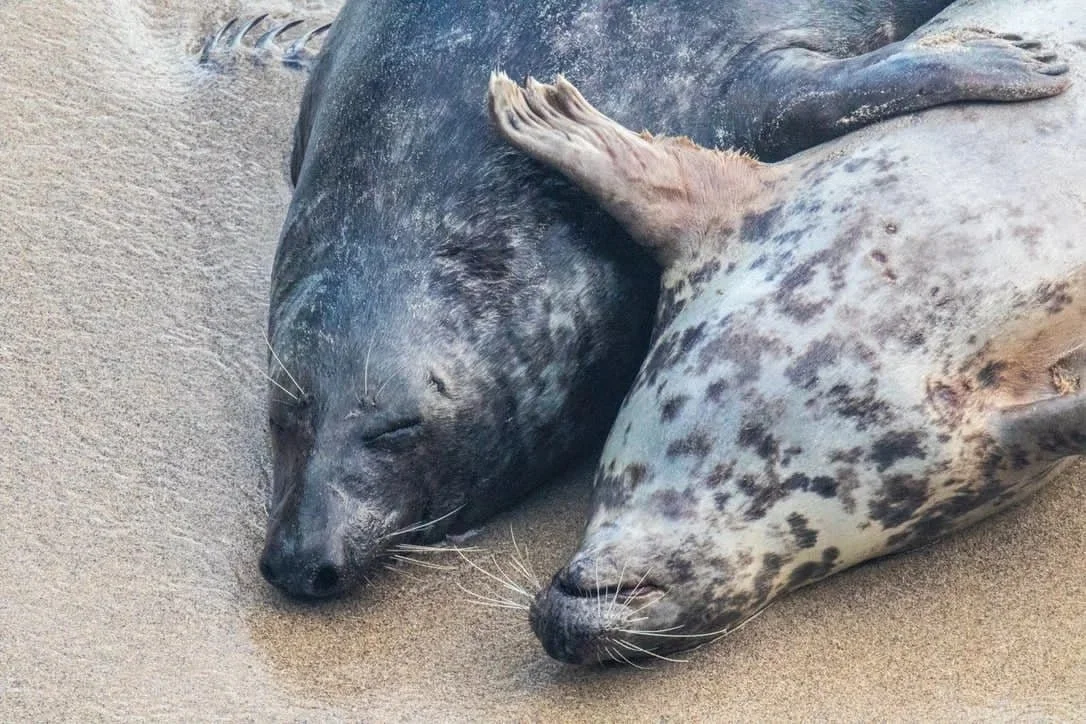
Snoozing seals
When do seals need to sleep?
Seals are high level mammals. They need quality rest and sleep too. Sleep for seals is strongly controlled by tides.
At low tide there is more available space to haul out to be safe enough to rest, chill, snooze, sleep and dream! Sealy heaven….and then we appear and usually way too close and far too loud.
Our response to an intruder
This is like a person opening our bedroom door and freaking us out. We are shocked, scared, have a massive adrenalin rush, raised heart and breathing rates using energy and a rush of thyroxine to prepare our muscles for rapid movement. If this turns out to be a stranger, our response maybe to run out of the door and out of the house or, if the doorway is blocked, we may be forced to jump out of the window. Not so serious if you live in a bungalow, but very serious if you are upstairs with inevitable consequences that likely include broken bones!
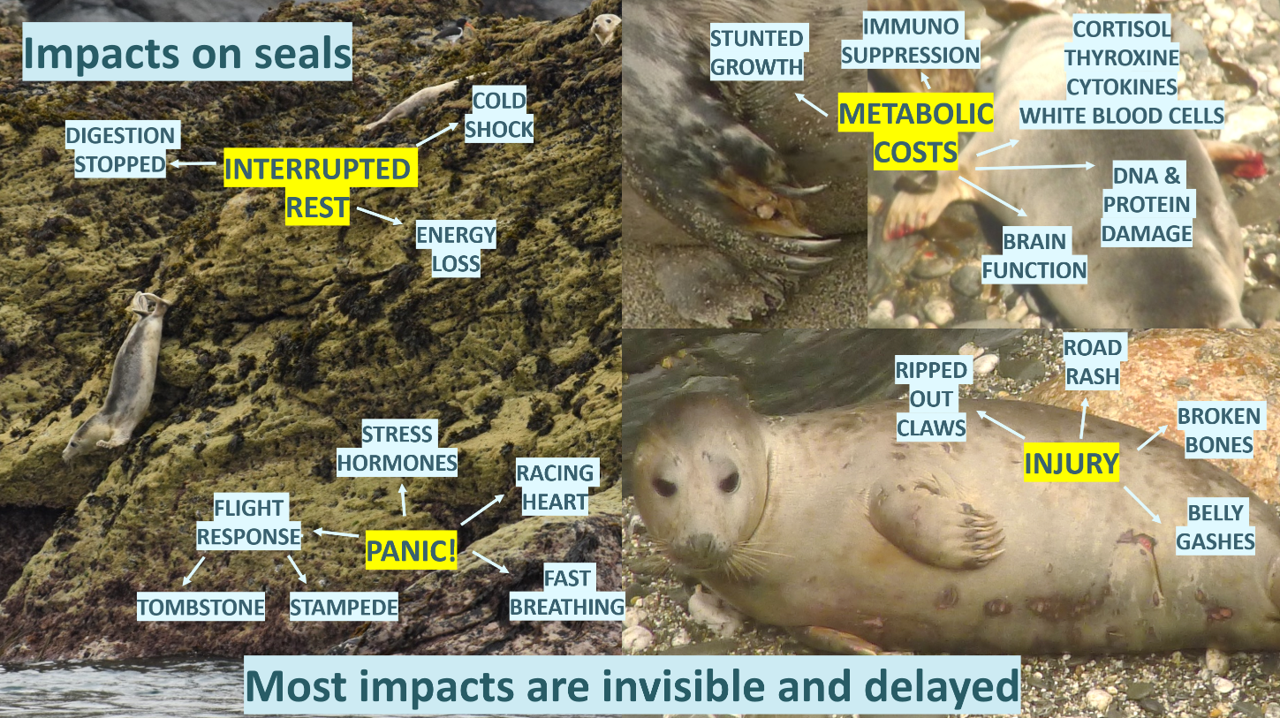
Disturbance impacts on seals
Seals response to an intruder
The same is true for seals. They are sleeping on one of their favourite rock ledges, beaches, seabed patches, caves or coastal structures and suddenly we appear (from land, sea, air, underwater and even underground).
If we are an unfamiliar activity or craft to them, then their response will be very similar to ours – adrenaline rush, raised heart and breathing rate using energy, with a rush of thyroxine to prepare their muscles for rapid movement. If the ground is flat they can rush in a stampede over the rocks or sand to the sea potentially injuring themselves with cuts and bruises. If they are high above the water then they must jump down the rocks to the safety of the sea, potentially bouncing on the rocks as they tombstone down. This can result in ripped muscles and tendons, broken bones and for unborn pups, abortions or premature births. Seal rib cages collapse as they dive in response to water pressure, so broken ribs can’t heal and neither can jaws as they must move them when feeding (a liquid diet is not an option for seals). If they are in cave they have no choice but race out in a panic past the intruders which can be very risky depending on the structure of the cave floor, or if they are underwater they must swim off at speed.
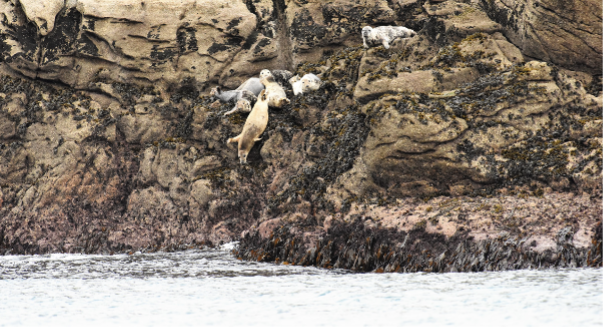
Tombstoning pregnant female
If we are familiar to them, because they have encountered us before, they may be habituated or tolerant. This means they may override their instincts to flee because they know it will cost them too much energy. Active fat and healthy seals may think it is still worth leaving. Thinner seals, or those feeling under the weather, may think they can’t afford the energy it will take for them to rush away, so they stay put. Their reaction is not easily predictable to us. Some stay put just looking up whilst others rush away. But one thing is for sure, if we were not there, they would still be relaxed and sleeping, making the most of the low tide cycle.
Research has shown that seals disturbed from a haul out are likely forced to go feeding to make up for the energy loss of racing away and swimming to safety. This means they stay away from their resting site….only returning at the first or second dusk later.
To learn more about the physiological and metabolic consequences of disturbance, click here »
Stages of sleep
People have different stages of sleep:
Light sleep
Deeper and deepest sleep
Rapid eye movement sleep, which is when we dream.
Seals can sleep underwater, at the surface or hauled out. They have different stages of sleep:
Quiescent waking (inactive, relaxed but awake) precedes sleep
Slow wave sleep in one or both side of their brains (one half can keep alert for danger or, if on land, both sides of their brain shut down and go to sleep)
Rapid eye movement sleep (which they can only do at the surface or on land)
Seals in quiescent waking react immediately to anything approaching. In their rapid eye movement stage seals may be unresponsive to anything approaching until we are so close that they get totally spooked with a massive panic response. Seals with twitching whiskers have been observed, which may indicate that they also dream!
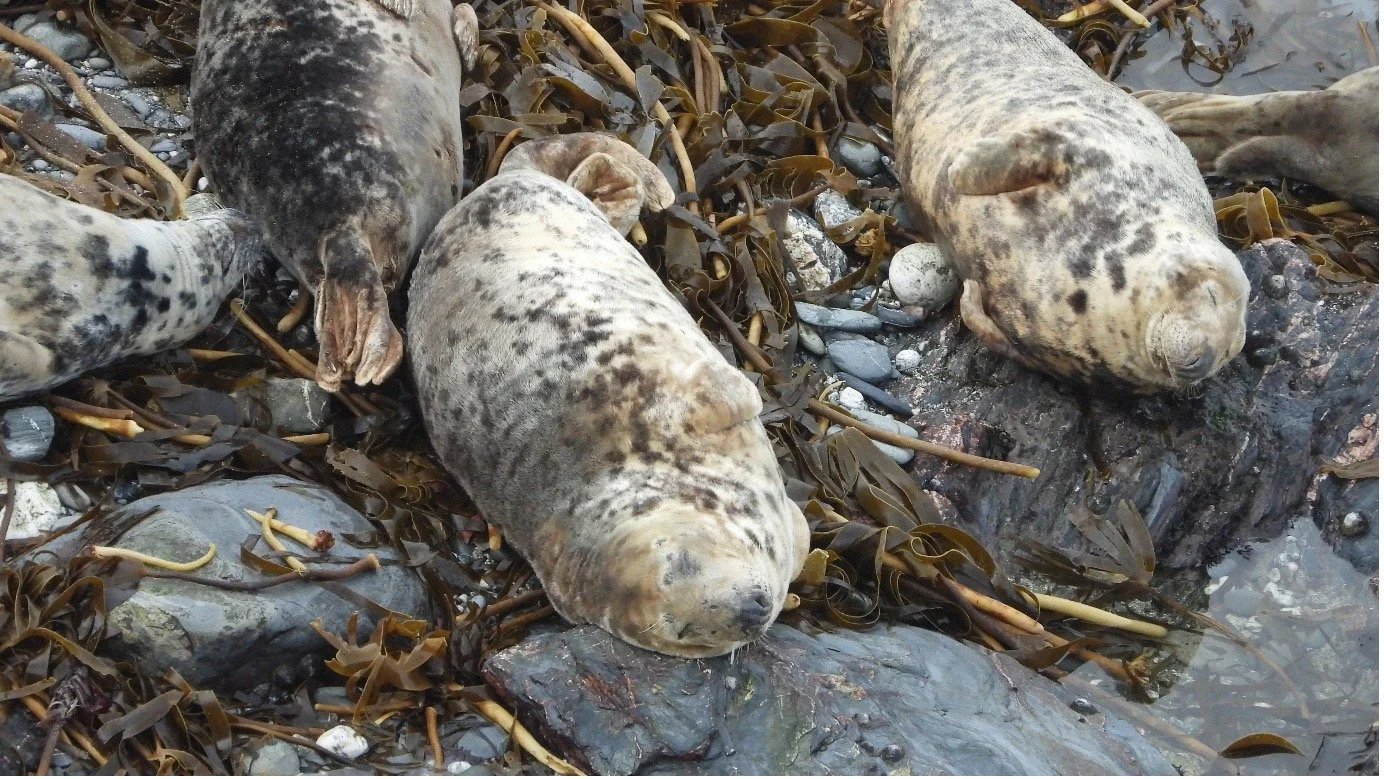
Seals sleeping peacefully without interruption
How much sleep does a seal need?
On average grey seals need to sleep for 6 out of 24 hours. However when on an extensive travel or foraging trip they will sleep for maybe 2 hours compared to when they are hauled out on land catching up for 10 hours. Harbour seals rest and sleep for between 7 and 12 hours a day, but also show extreme flexibility. Please be aware that sleep will vary considerable between seal species and new science is emerging all the time to better understand seals and their sleep.
So what is a safe distance to let seals stay sleeping peacefully?
SRT volunteer Malcom Baker recently undertook some groundbreaking research to answer this question. He used a high spec Rangefinder and Anglefinder to accurately assess the distance people were from resting seals. He also recorded the seals’ responses to the activities present. His results surprised us all. The Defra Marine and Coastal Wildlife Code advice suggests a minimum approach distance of 100m.
Malcolm’s research findings were:
The average distance people were from seals was 48m (the closest approach was 9.8m)
Seals were disturbed in 71% of observations and on average every 4.1 minutes
Distance was the main driver of disturbance
At 100m there was a 47% chance of a seal looking at you – so not sleeping. At 200m this fell to an 8% chance, so 100m is already a compromise for seals and their sleep
The first activity of the day had the most chance of disturbing seals
Bigger groups of seals increased the chances of them being disturbed. It only takes one seal to be scared and start a domino effect stampede
Breaking two Wildlife Safe Scheme (WiSe) codes, even at 100m, increased the chances of disturbance to over 60%
Although a small sample, paddlers caused disturbance 90% of the time and 60% of paddler disturbances were severe with seals stampeding/tombstoning into the sea
Click here to read Malcolm’s amazing report »
Click here to get a printable graphic summarising the research findings »
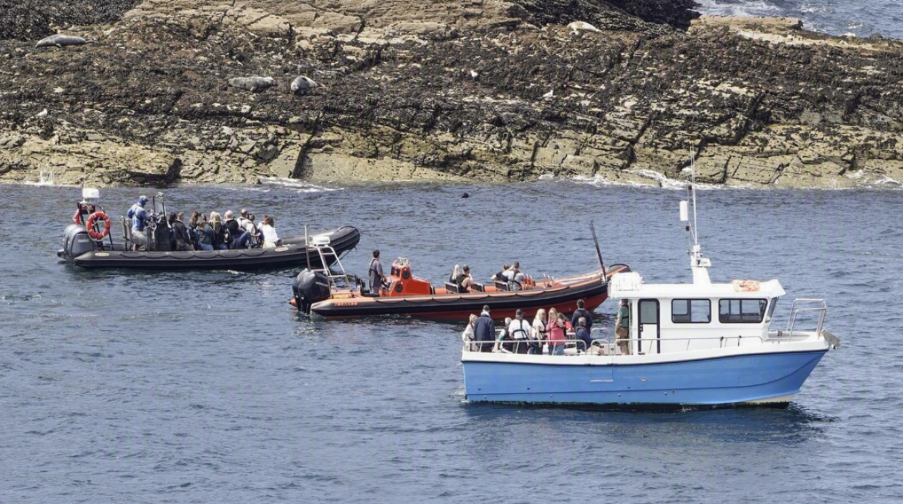
Human activity way too close to seals preventing them from getting quality sleep. Seal numbers at two sites regularly monitored by SRT volunteers have dropped dramatically. The site with the most activity has seal numbers dropping the fastest, suggesting that this level of ongoing activity is not sustainable, as seals are moving and choosing to rest elsewhere.
What are the signs of disturbance?
Resting seals look relaxed and have their eyes closed even when in the water or on the seabed.
A seal waking up and looking at you is the first sign of disturbance on land and in the sea.
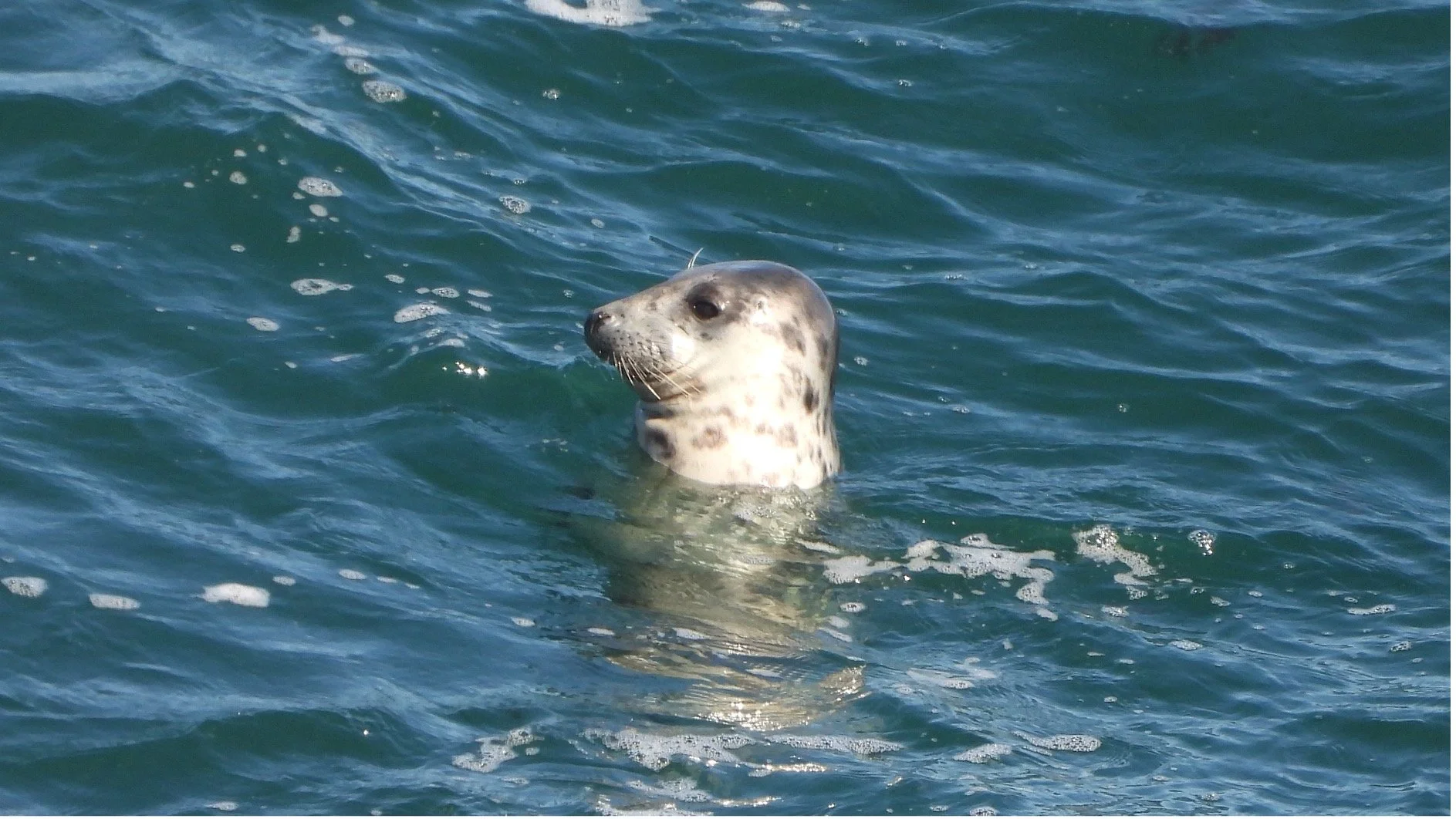
An alert seal who is slightly worried has spotted something it feels needs checking out
A seal moving in response to you – either away from you or towards the sea is the next sign.
A seal crash diving with a big splash after looking at you is panicking.
A seal stampeding or tombstoning into the sea is the worst and most serious level of disturbance. Its sleep will likely have been interrupted for an entire tide cycle as it has to leave the site and either go foraging to make up for the lost energy or find another safe resting spot with may be 10km away.
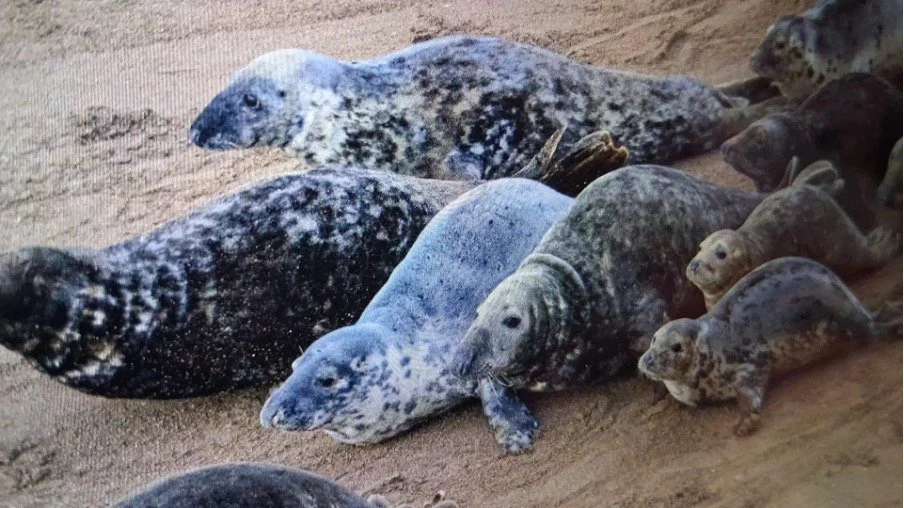
Seal stampeding down a beach at high speed
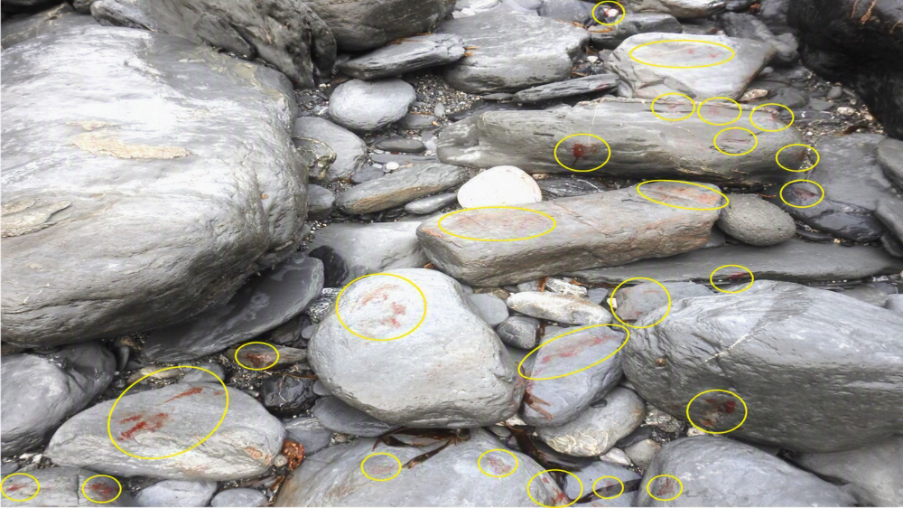
Blood trails left by stampeding seals
How bad can it be?
On a single summer survey when there were only 8 seals left on an offshore haul out, SRT recorded 6 visiting wildlife tripper boats in 36 minutes. The seals reacted 20 times between them meaning a seal was woken up every 1.6 minutes.
How can you help seals?
If we were really serious about letting sleeping seals lie, then we would stay over 200m away from their ‘bedroom’. If this seems unrealistic, we must all support and follow the 100m rule. This way you are at least giving most seals the personal space they actually need to sleep and stay healthy.
Let’s get seal better protection
SRT are partnering with the Seal Alliance and Wildlife and Countryside Link to get better legal protection for seals. This would cover the occasions when people intentionally disturb seals.
Please consider signing and sharing our Give Seals Space petition to show the government that enough people support this idea for them to make it happen. We are aiming for 100,000 signatures, and you can help us get there. You can regularly share the petition, asking people across your networks to do the same.
Seals need us all to click here to access their ‘Give Seals Space’ Campaign:
https://www.change.org/p/give-seals-space
To read the Campaign Pack and use the Campaign Resources go to the top right menu on the Seal Alliance Website:
Interrupting seals vital resting time is not what they need. It also means that we don’t get to enjoy their natural behaviour, nor appreciate them for very long if we flush them prematurely into the sea out of sight.
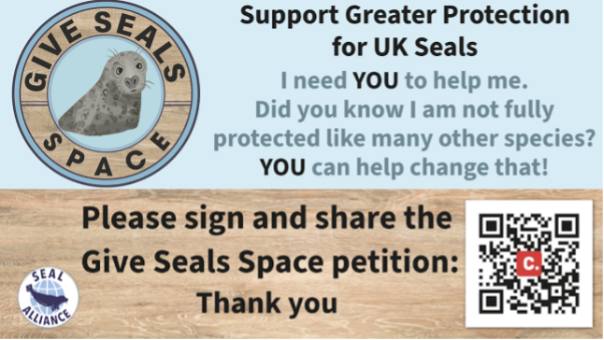
Seal Alliance Give Seals Space Campaign
Thank you for taking the time to learn more about seals and our impacts on them. SRT is a charity dependent on funding we get from private donations, corporate partners, our Wild Seal Supporter and Adoption Scheme and our One Stop Online Sealy Shop!
Please consider giving us a donation you can afford to help us with our mission to inspire, empower and connect people to help wild seals thrive:
https://www.sealresearchtrust.com/donate
When you need a gift or treat for a lovely one, please consider looking at our online shop, knowing all profits are used to help wild seals thrive!
If you love seals too then please consider leaving seals a legacy for the Seal Research Trust in your will.
There is no doubt that with the cumulative impacts of climate change seals need our help more than ever!